
Pets and Vehicles
Our dogs love to go places with us, we understand that. However, when it gets hot in the summer, taking your pet along to run errands can be exceptionally risky.
Vehicles become very warm inside, even on mild days. On hot days, the temperature inside a car can climb to above 40 Celsius in just a few minutes. And since dogs cannot sweat, they can suffer heatstroke very quickly. Some caregivers may choose to leave the vehicle running while they run inside a store, but the air conditioning can fail, and the vehicle becomes an easy target for theft. On hot days, the safest place for your dog is at home.
If you see a dog in a vehicle that appears to be in distress, call 9-1-1. Police can get to the vehicle much quicker than an Alberta SPCA Peace Officer. They have the legal authority to enter the vehicle, if necessary.

Signs of Heatstroke
- listlessness
- excessive panting
- diarrhea & vomiting
- restlessness
- pet appears distressed
Staying Cool Outside
It doesn’t matter how hot it is outside, our canine family members like to go for walks and play in their yard. But these activities present health risks when it’s hot and/or humid. Also, the asphalt can be quite a bit warmer than the outside temperature. On hot summer days, try to avoid the mid-day sun and go for walks in the morning or in the evening. If it is hot, try to focus your walk on grassy areas, not pavement or concrete. If your pet wants to play in the backyard, ensure they have a shaded spot to go to for a break and plenty of water. Also, many dogs enjoy having a kiddie pool or other water sources to help stay cool. Be sure to reduce the amount of time your pet is outside, both for walks, and when playing, and to keep an eye on them while outside to ensure they’re not overheating.
Staying Cool Inside
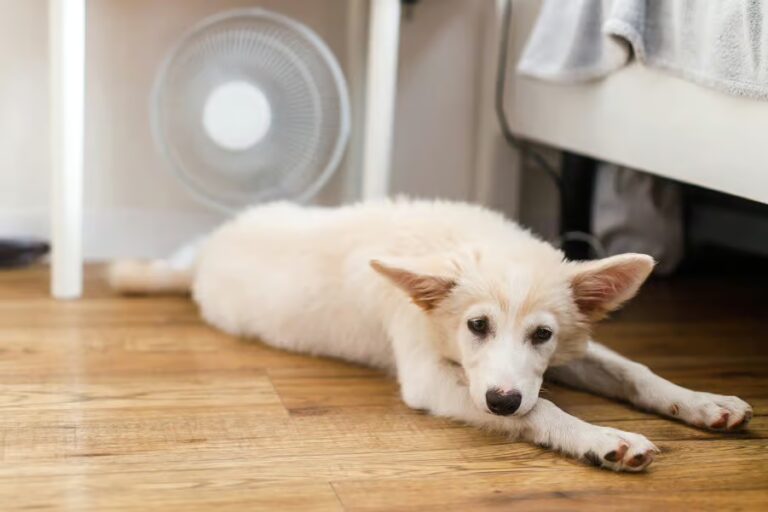
Many homes in Alberta do not have air conditioning and become very warm and uncomfortable in the summer. Ensure your pets have access to plenty of cold water, refreshed often. Frozen treats are another great way to ensure your pet can cool off. A frozen Kong with their preferred treat or placing kibble inside a bowl of frozen water will help keep them cool and entertained. If your house or apartment suite does not have air conditioning, keep a fan going in your home. It is also recommended to give your pet access to the coolest parts of your home, such as your basement, and/or close the blinds or curtains to limit direct sunlight.
Avoid Crates
If your house or apartment becomes warm in the summer, avoid kennelling your dog. Dogs need space to move around, and access to water on warm days. Putting them in a crate for any period of time could lead to heatstroke
What to do if a dog is suffering from heatstroke
- Move to a cool or shaded area and direct a fan on him/her,
- Begin to cool the body by placing cool, wet towels over the back of the neck, in the armpits and in the groin area,
- Wet the ear flaps and paws with cool water,
- Transport to a veterinary clinic immediately.
What not to do
- Do not force water into your pet, but have it available if they show interest in drinking.
- Do not over-cool the animal,
- Do not leave your pet unattended for any length of time.