
Schools are out across the province. Students have stowed away their backpacks and teachers have put away their lesson plans for the summer, but for Education Program Manager Don, next year doesn’t seem so far away.
“We’re already working on new resources for next year,” said Don. “It was a great year for the education
program, but we’re always looking to grow and improve.”
Humane education — an approach to teaching that fosters empathy, kindness and compassion for people, animals and the environment — is a powerful way to build a lifelong commitment to animal welfare. Research shows that humane education programs can improve attitudes towards animals, bolster empathy and positively impact prosocial behaviours such as sharing, helping and cooperating.
However, creating humane education resources, lesson plans and content from scratch is simply not feasible for many teachers. That’s where the Alberta SPCA’s education team steps in, providing free, classroom-ready resources to teachers across the province.
Humane Education in the Classroom
The Humane Educator Toolkit consists of various cross-curricular programs and lessons that are easy to implement and are aligned with the Alberta curriculum. This past year saw the launch of a refreshed toolkit, updated to align with changes to the curriculum. Through the Alberta SPCA Teacher Advisory Committee, teachers from across the province helped provide input and guidance on the toolkit, bringing classroom perspectives to the table.
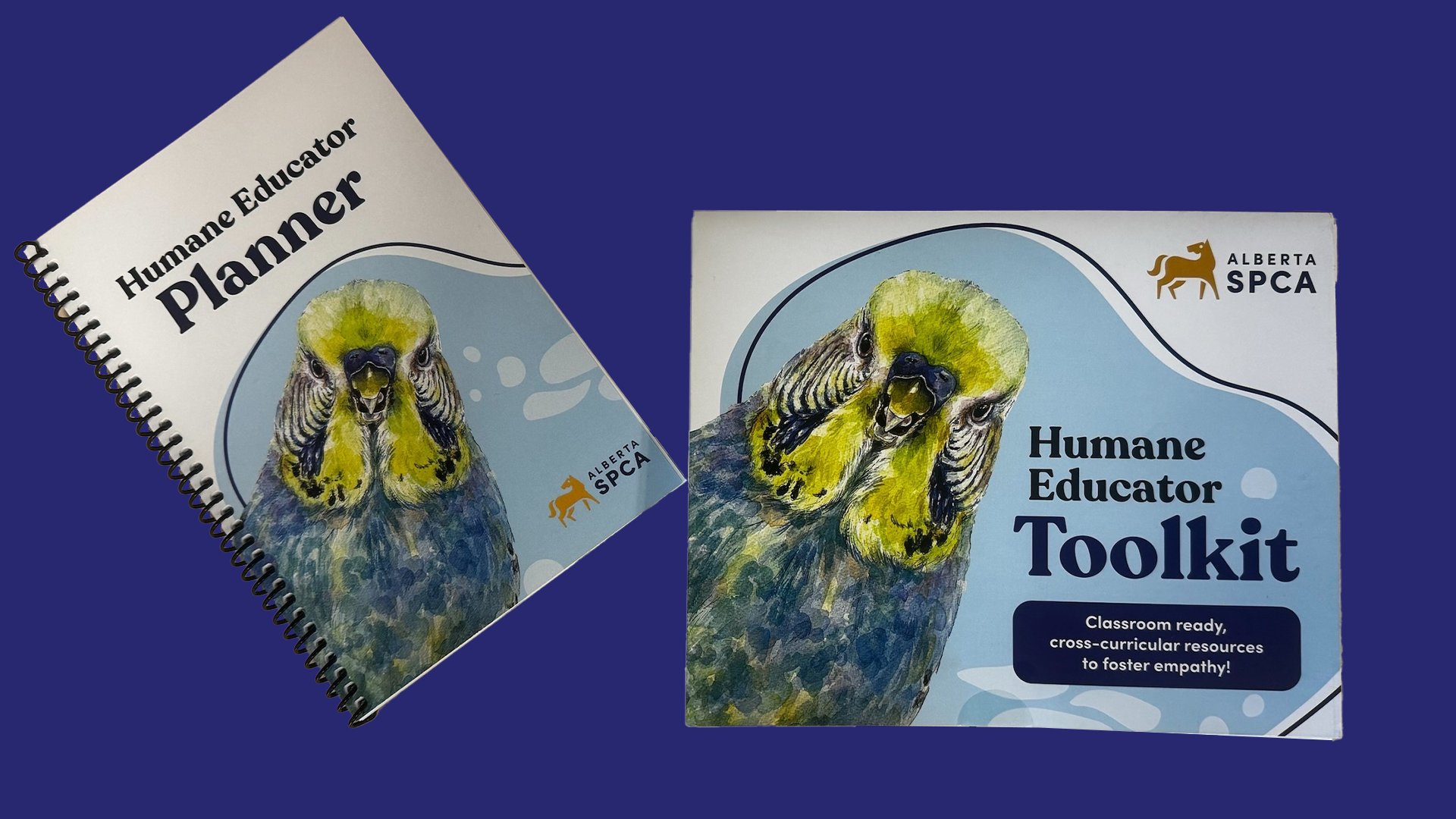
The 2025-26 toolkit features a refreshed design and new lessons and programs
Included in the toolkit is the student-favourite AnimalTales literacy program, Indigenous Perspectives through the Seven Sacred Teachings and the Social-Emotional Learning with Animals program, which was launched this past year.
“Teachers spend a lot of time planning and prepping. To have a package delivered and completely prepared was a gift. More work around social-emotional learning is key for classrooms and this helped to tie more in.” Grade 3 teacher, Calgary
“Animals can play such an important role in positive social-emotional learning,” said Don. “Children interact with animals constantly, and teaching them kindness and empathy towards animals can help them regulate their emotions, build healthy relationships and encourage responsibility.”
“Teachers know best what works and what doesn’t work in the classroom” said Don. “We provide them with the framework, but they understand how their students learn. That’s why it’s so important to have their perspectives.”
Connecting with Students
While the majority of the education program is aimed at teachers, looking beyond the classroom, in fun and engaging ways, helps us further expand our reach.
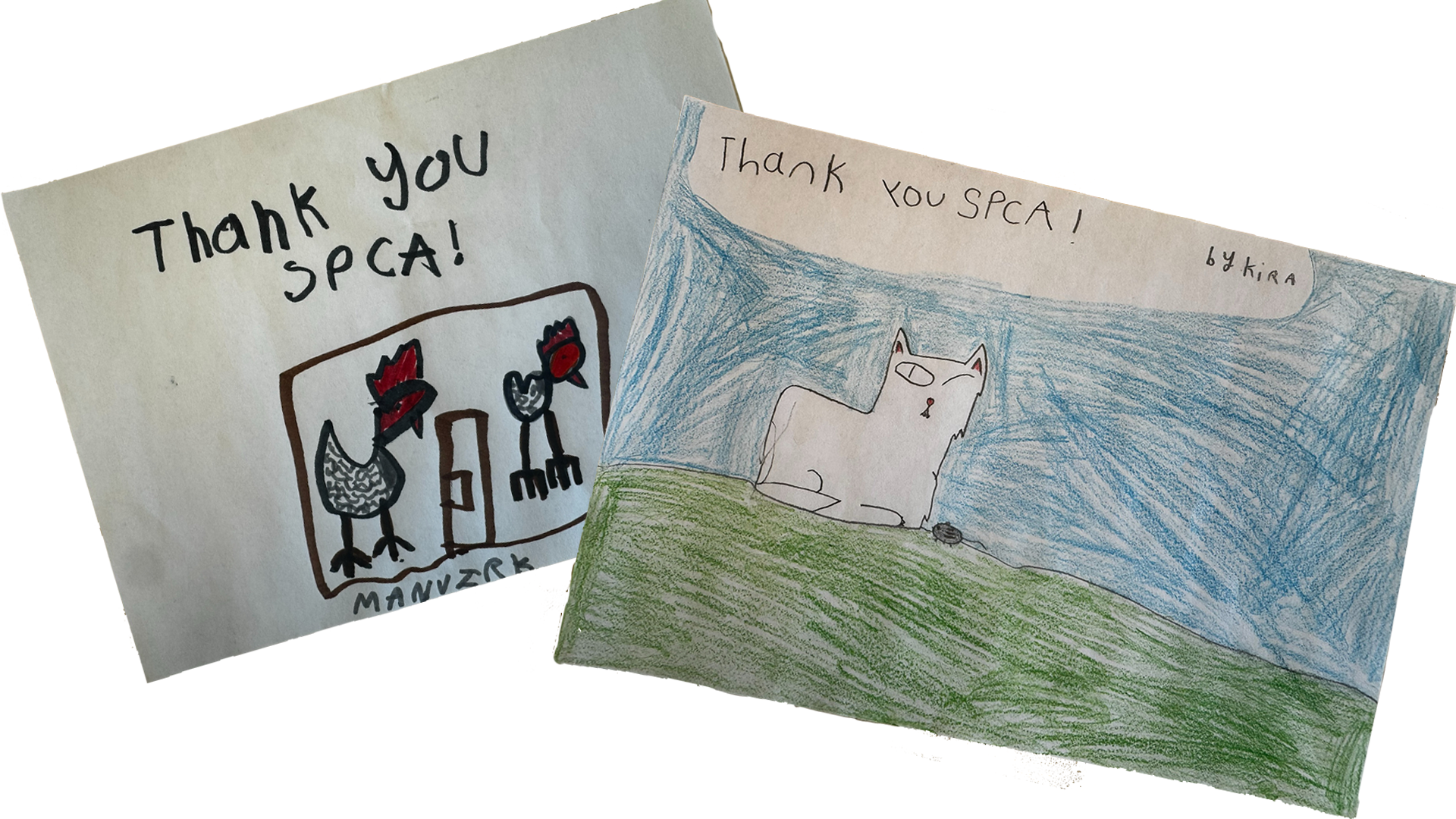
Thank you pictures from Grade 1 students in Airdrie
This spring was the second year of the Alberta SPCA T-Shirt Design Contest, an opportunity for students to have their original artwork featured on Alberta SPCA t-shirts.
“We asked students to use their creativity and show us how they are a friend to a pet or farm animal, to go along with this year’s theme of friendship,” said Don. “We had over 250 submissions, twice the amount we saw in our first year.”
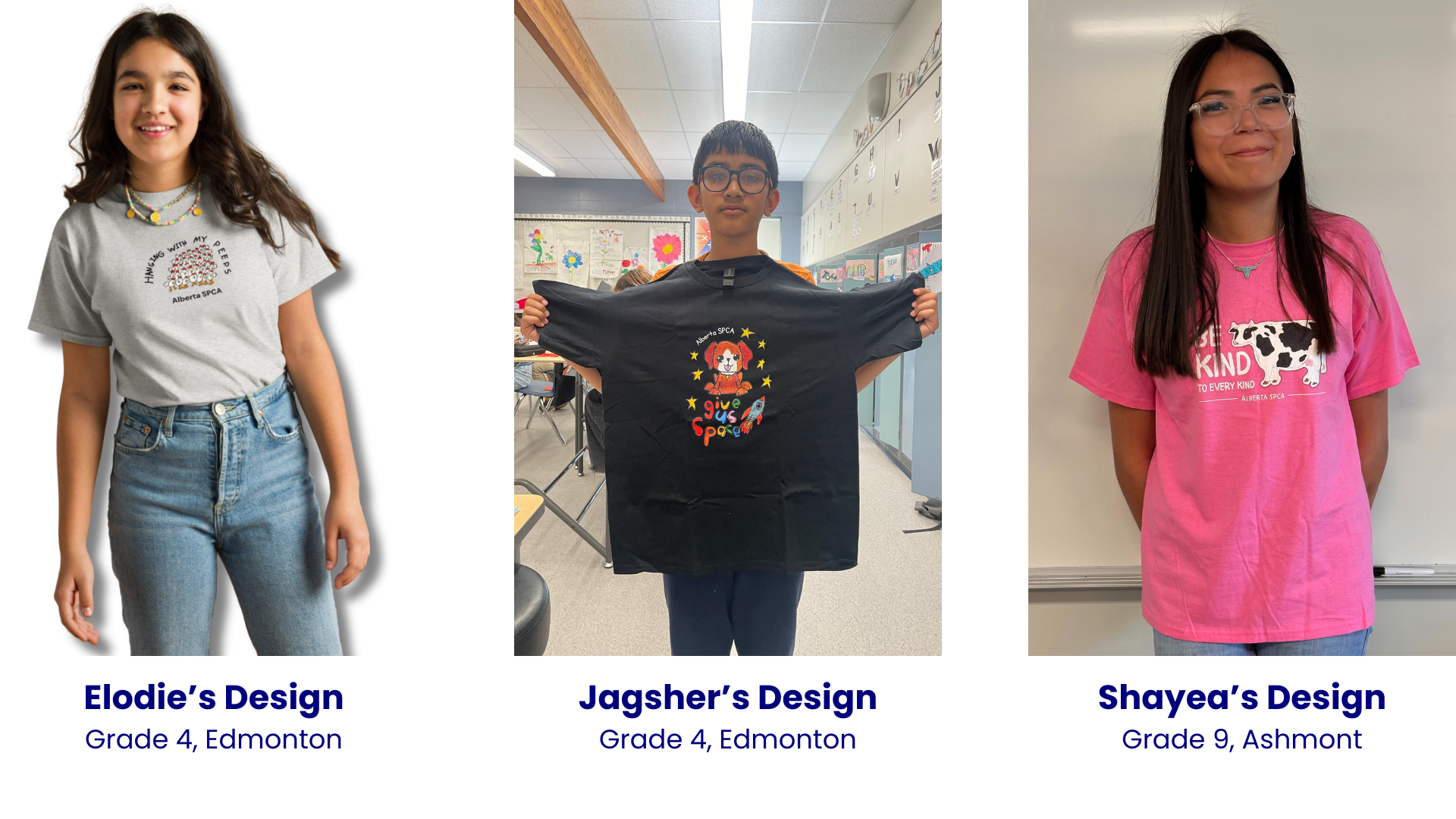
The winning student-created designs
Students of all ages from every region of the province participated, and the winning designs, selected by a panel of Alberta artists, are featured on t-shirts available for purchase. Visit the Alberta SPCA store to purchase a t-shirt and help animals across the province.
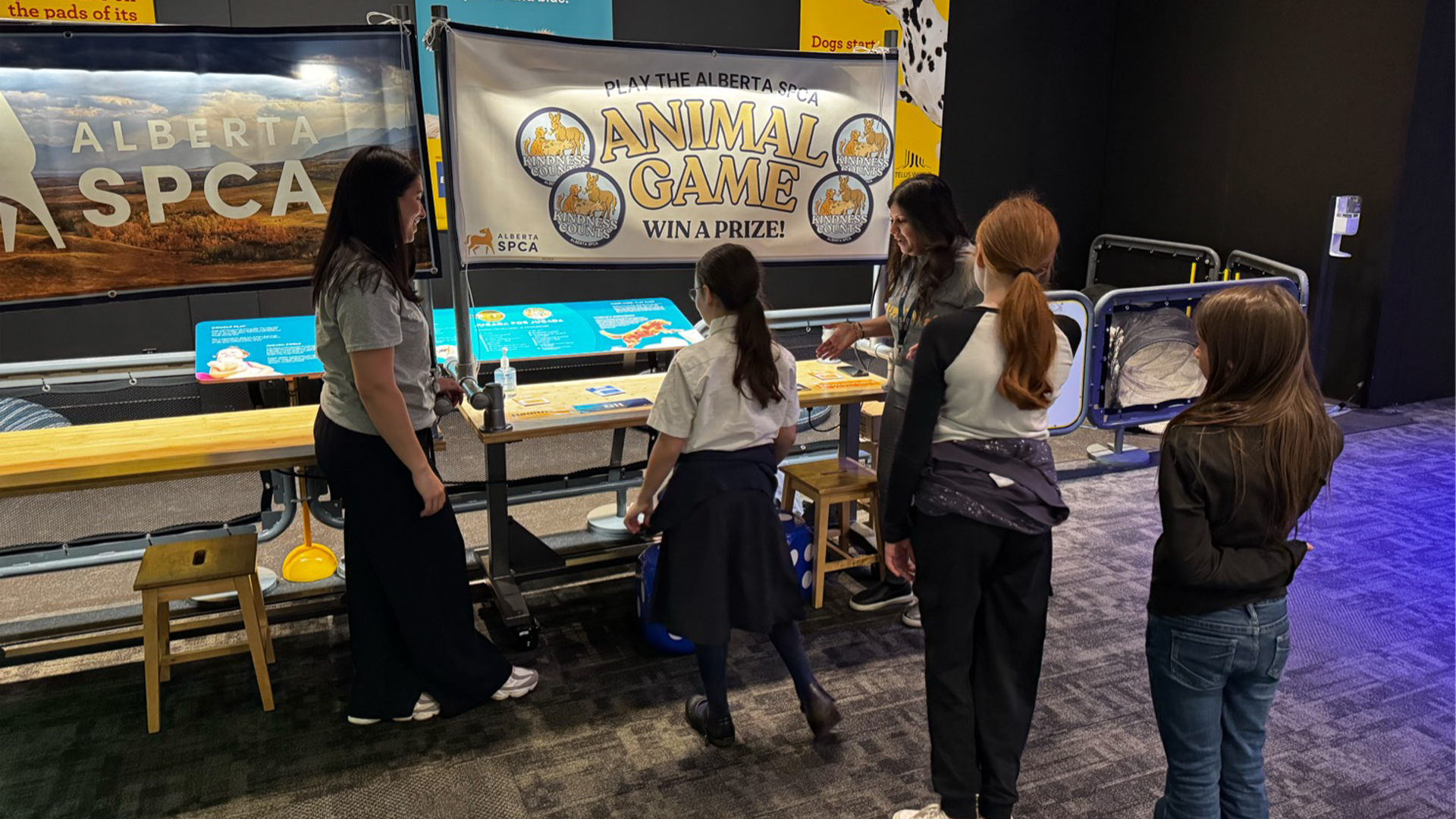
Students participated in the Alberta SPCA Animal Game at the Dog! A Science Tail event
Various events throughout the year, such as Aggie Days in Calgary and Dogs! A Science Tail at the TELUS World of Science in Edmonton, offered the Alberta SPCA team opportunities to interact with students face-to-face, helping them better understand key humane education topics such as the five needs of animals.
Summer Plans
While no major changes are coming to the curriculum next year, there’s still work to be done to ensure teachers and students receive the tools they need to succeed.
“We always look at our teachers’ feedback and say, ‘what worked this year?’” said Don. “There’re always improvements, whether it be small tweaks or new programs.”
Thanks to a Canada Summer Jobs grant, we hired a classroom teacher for the summer to collaborate with on creating new resources and updating current ones, such as expanding the Social-Emotional Learning with Animals program.
The Humane Education program is part of the Alberta SPCA’s prevention-focused efforts. While enforcement plays a critical role in relieving immediate distress, education helps build compassionate communities where animals are treated with kindness and respect.
Teachers interested in humane education can head to EveryLivingThing.ca and sign up for the monthly newsletter to receive classroom-ready resources in their inbox.
Education plays a critical role in protecting animals and preventing neglect and cruelty, but there’s still an immediate need to protect animals in distress. The Alberta SPCA responds to thousands of calls per year, investigating reports of animals in distress across the province. With 80% of our funding coming from donations, we rely on generous Albertans to enable us to be the front line of animal protection.