
When the Alberta SPCA Peace Officer arrives at a property to check on the welfare of animals, she is always on the lookout for signs of a bigger problem. Sometimes, it’s a nearby vehicle that is stacked full of clothes or bottled water, or perhaps it’s the home’s windows, with the curtains drawn shut, but air fresheners hanging from the rod. Another red flag is an abundance of canned food visible through the windows. Peace Officer Karen Stevenson has seen it all.
“When it comes to hoarders of cats, the animals get into the walls of the home,” explains Stevenson. “The electricity goes, the drywall, insulation. The only food they can keep in the house is in cans, because the urine and feces don’t get into the cans.”
Peace Officer Stevenson, who is also a Registered Veterinary Technologist, has taken extensive training to understand the mindset of hoarders so she can better understand how to help them and the animals at the same time.
While it can be easy for people with collector tendencies to accumulate cats due to their high reproduction rate, Stevenson says she sees situations involving many different species, and in some cases, numerous species on the same property, which can include rabbits, sheep and miniature horses.
I find some hobby farmers can be the worst hoarders.” explains Stevenson. She says people in this situations might accumulate animals from their neighbours, perhaps under the notion that they’re saving the animal from slaughter or euthanasia. Before too long, they have more animals than they can manage.
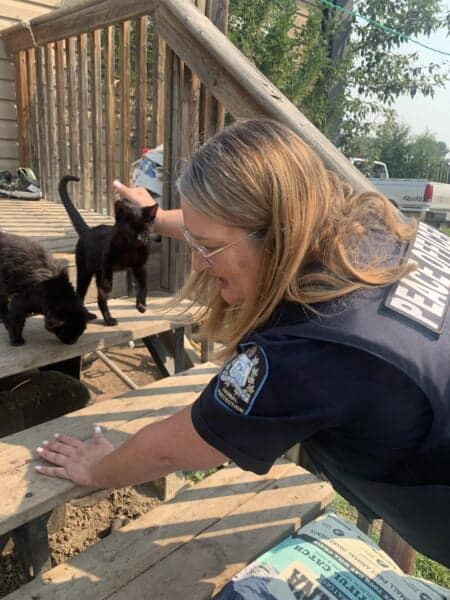
“But people don’t look at that as a hoarder,” Stevenson elaborates, “they look at it as a hobby farmer.”
Regardless of the species, Peace Officer Stevenson approaches each case with compassion, for the animals as well as for the owner.
“I talk to them like they’re a human,” says Stevenson, which often doesn’t happen. It’s much more common for the hoarder to be shamed.
“Often, they’re lonely, and they feel they’re doing good by helping the animals.”
The hoarder often understands their situation has grown out of control, but they lack the skills to deal with it. For Stevenson, goal number one is always to make a connection and gain the trust of the owner.
“I feel you get a little more cooperation and help for the animals if you come in willing to listen to their side, willing to listen to why this has happened, how this has happened.”
MANAGING THE ANIMALS
Peace Officer Stevenson finds she gets far more cooperation from the animal owner if she allows them to be a part of the decision making on how to rectify the situation. She’ll first offer to take just a few of the animals, usually the ones that may be in immediate need of veterinary care.
“Every single hoarder I’ve ever worked with wants the number of animals they have to come down,” explains Stevenson, “But they fear the animals will be euthanized.”

Stevenson will start by bringing kennels into the home and allowing the hoarder to choose which animals will be leaving and permitting them to put the animals inside the carriers. This limits stress on the animals, and in turn, reduces anxiety on the owner and make a return visit by the Peace Officer more acceptable to the owner.
This process was used by Stevenson in the winter of 2020 when she removed 143 cats from one Edmonton area townhouse. The felines were slowly removed over four different visits, allowing the cat owner time to process what was happening and mentally adjust to the changes underway in their home.
“Once the carriers are loaded in my truck, I always allow the owner to come see the cats so they know the animals are okay,” says Stevenson, “because at that point, their anxiety is really high.”
At this point, a plan is made for the next visit by the Peace Officer so the hoarder has time to prepare emotionally for the next group of pets that will be leaving.

In the case of the 143 cats, most were relatively healthy and were re-homed via the Edmonton Humane Society. Peace Officer Stevenson allowed the hoarder to keep six healthy cats, and ensured all were spayed or neutered so the cats did not have the ability to quickly multiply once again. Leaving the owner with some animals is an important part of the process.
“Hoarders tend to be isolated and lonely,” Stevenson explains. “If we leave them with no animals, they’ll start accumulating again, and we’ll be back at the property in three to six months removing animals.”
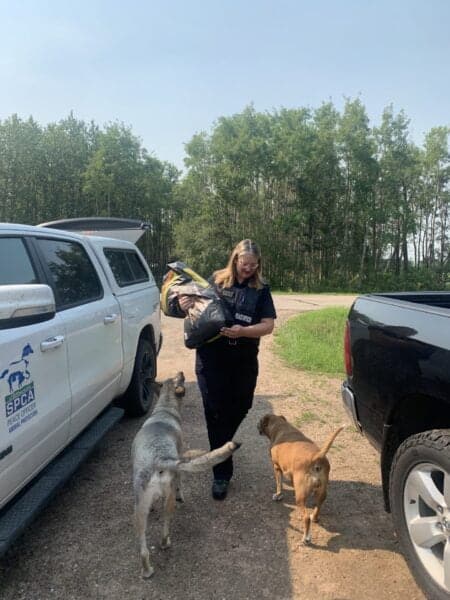
While Peace Officer Stevenson does her best to work with the hoarder to reduce animals to a manageable number, there are some circumstances where the owner cannot or will not cooperate. There are also situations where the distress level is significant and the animals have to be removed all at once. Regardless, the Alberta SPCA ensures there are mental supports available for the animal owner, whether it’s the Alberta SPCA’s One Family Welfare department helping to connect them with supports, or ensuring a social worker in on site while animals are being removed.
Stevenson also does her best to stay in contact with the hoarders she’s had dealings with, even if it’s just checking in every three to six months. It’s a small step, but one Stevenson feels can go a long way to ensuring the hoarder feels validated. That, Stevenson says, helps prevent another out-of-control situation from emerging, once again putting the collector and animals at risk.