
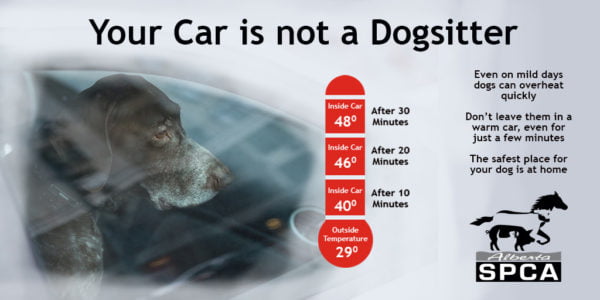
As the temperature rises, so do the number of calls about dogs being left in vehicles.
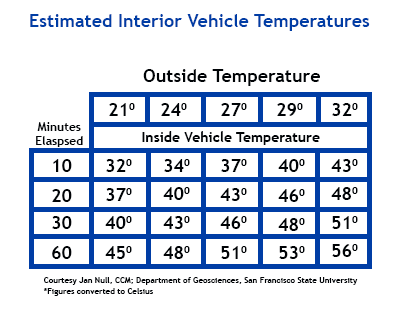
Most people understand that leaving a pet in a vehicle on a hot day can lead to death or serious health problems for dogs in a very short period of time. However, even on mild summer days it does not take long for the temperature in a car to reach dangerous levels. The following chart shows the temperature inside a vehicle in a study conducted at San Francisco State University. The figures have been converted to Celsius from Fahrenheit.
The study also found that cracking the windows or parking in the shade did not have much impact on how hot a vehicle gets.
Dogs have limited ability to sweat so the effects of a warm vehicle are exacerbated for our canine friends. This means a dog can overheat and go into medical distress quickly. A warm vehicle creates a potentially lethal environment in a very short period of time.
If you see a dog inside a vehicle, call 911. Police can get to the dog to free it much quicker than an Alberta SPCA Peace Officer.
Dog owners who leave their dog in a hot vehicle could be charged under the Animal Protection Act. If convicted, the owner could face a maximum fine of up to $20,000 and a lifetime prohibition from owning animals.
To Report an Animal in Distress call
1-800-455-9003
17904 118 Ave. NW, Edmonton, AB T5S 2W3, Canada
[email protected]
Under the Animal Protection Act, peace officers have authority to investigate concerns of animal abuse or neglect if there is reason to believe that an animal is:
(a) deprived of adequate shelter, ventilation, space, food, water or veterinary care or reasonable protection from injurious heat or cold,
(b) injured, sick, in pain or suffering, or
(c) abused or subjected to undue hardship, privation or neglect.
Does your concern meet these requirements?
In Edmonton:
311
Edmonton Animal Care & Control Centre
In Calgary:
403-205-4455
Calgary Humane Society
On a First Nation or Reserve:
Contact Band leadership or the RCMP
Outside Calgary, Edmonton, or First Nations:
1-800-455-9003 or complete online
Alberta SPCA
What you need when you call:
Address, details (must be firsthand), date and time, description of owner and animals
If your concern is regarding intentional cruelty to
an animal, contact your local police or RCMP. If the
animal is in immediate danger, call 911.
If not, start again.
Stray animals and abandoned animals are different.
An abandoned animal has been intentionally left behind by their owner or caretaker, without proper care or intention to return.
A stray animal may or may not have an owner or caretaker, and is wandering at large (off the owner or caretaker’s property).
In Edmonton:
311
Edmonton Animal Care & Control Centre
In Calgary:
403-205-4455
Calgary Humane Society
Outside Calgary and Edmonton:
1-800-455-9003
Alberta SPCA or complete online
Companion Animals
In Edmonton:
311
Edmonton Animal Care & Control Centre
In Calgary:
311
Calgary Animal Services
Outside Calgary and Edmonton: Contact municipal enforcement / bylaw office
Livestock
Contact Livestock Identification Services at 1-866-509-2088.
After hours, contact your local non-emergency police line